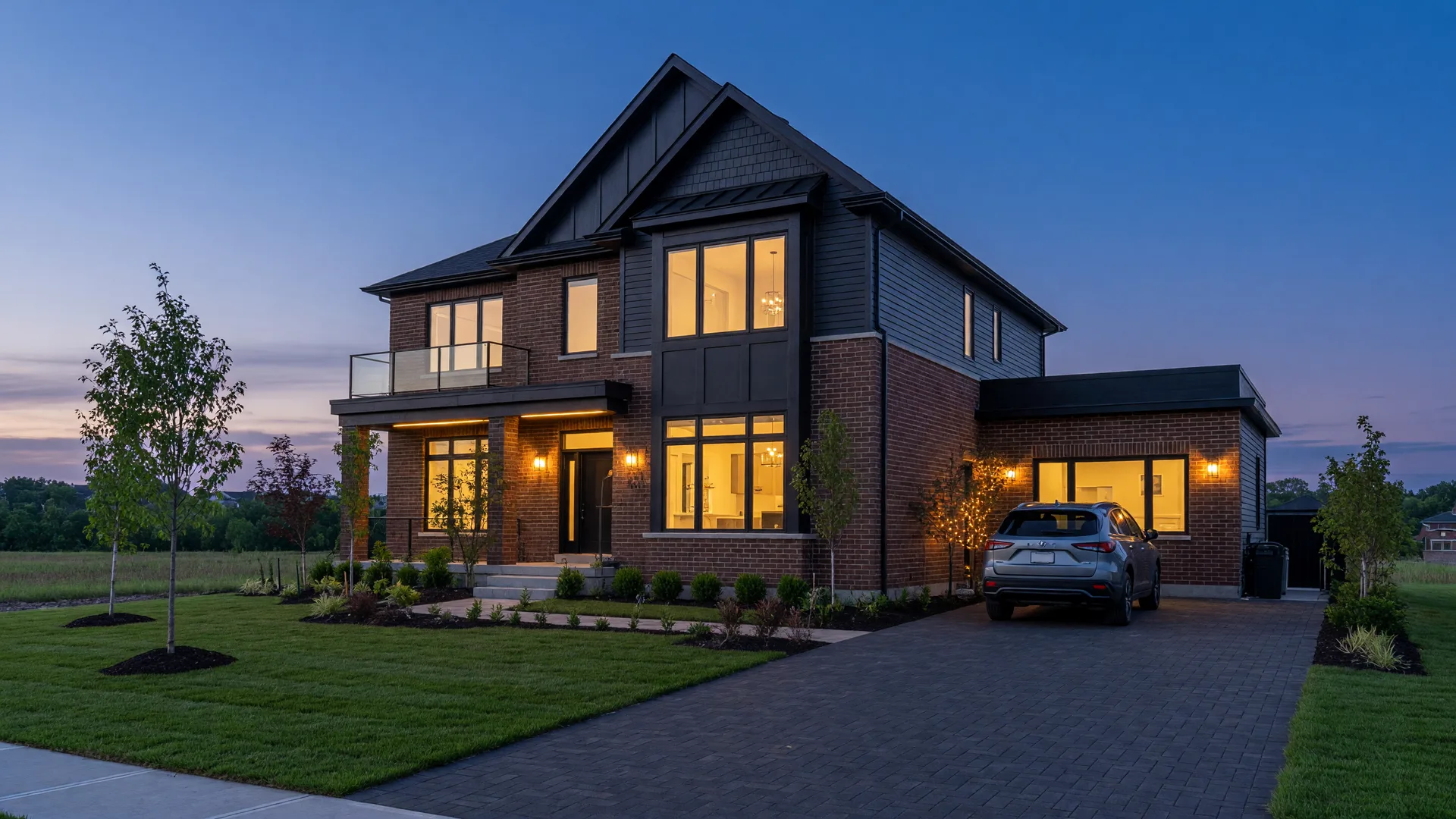
Why should buyers consider new construction in Durham Region? Newer builds typically include smart-home and energy-efficiency features that lower ongoing costs, they carry Ontario's Tarion new home warranty with deposit protection and multi-year coverage, and they need fewer immediate repairs than a resale. The trade-offs require homework: confirming the builder is licensed, understanding exactly what the warranty covers, and completing a careful pre-delivery inspection, all of which this guide walks through step by step.
Key Takeaways
- Newer Durham builds typically include smart thermostats, energy-efficient windows and insulation, heat pumps or efficient HVAC, and smart lighting, all of which reduce ongoing utility costs.
- Every new home in Ontario must be enrolled with Tarion, which provides deposit protection before closing and 1-2-7 year warranty coverage after, subject to defined limits (up to $400,000 for freehold homes under agreements signed on or after July 1, 2023).
- Freehold deposit protection covers up to $60,000 for homes priced at $600,000 or less, and 10% up to $100,000 for homes priced above $600,000 (agreements signed on or after January 1, 2018); condo deposits are protected up to $20,000.
- Durham Region's 2024 building activity leaned heavily toward ground-related and higher-density forms, and the Region's own annual review tracks the pace of starts and completions across its communities.
- Before signing, verify the builder's HCRA licence, read the Tarion coverage documents, review the occupancy date and timelines, and plan a thorough pre-delivery inspection (PDI).
What Smart and Energy-Efficiency Features Newer Builds Include
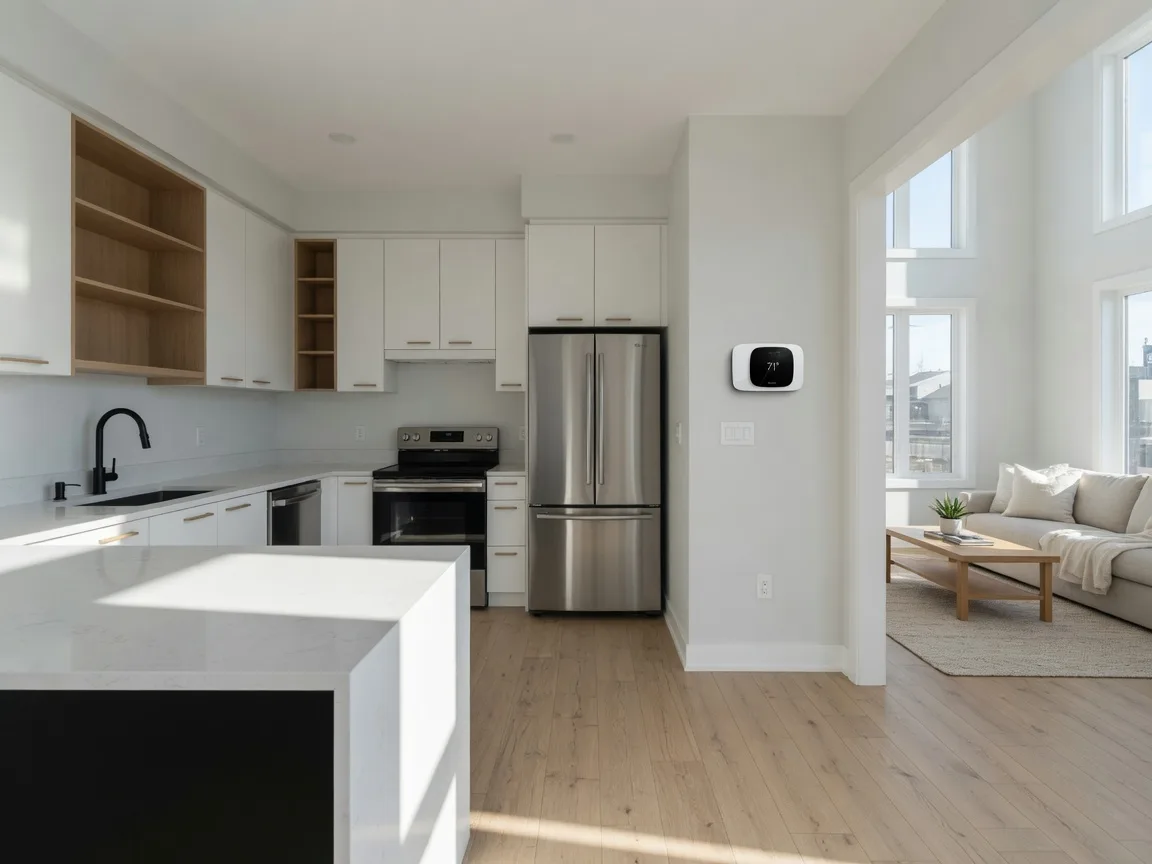
The most obvious difference between a new build and a 30-year-old resale is the technology baked in from day one. Newer Durham Region homes commonly include programmable or learning thermostats, energy-efficient windows and doors, upgraded insulation that meets or exceeds the current Ontario Building Code, and increasingly, heat pumps or high-efficiency HVAC paired with the wiring and panel capacity to grow from there. Smart lighting, smart doorbells, and pre-wired security are routine inclusions in many new communities, and EV-ready garage wiring is becoming standard as buyers ask for it outright.
None of these features is a gimmick. Energy-efficient construction and smart controls translate directly into lower hydro and heating bills month after month, which is the recurring-cost argument for new construction, and the Ontario Building Code raises the baseline for every new home regardless of the builder. Our guide to the real cost of homeownership in Durham Region in 2026 shows how utility, insurance, and maintenance costs add up on a resale, which is useful context for comparing the two purchase routes honestly.
The Benefits: Lower Ongoing Costs, Warranties, and Fewer Immediate Repairs
Buyers often fixate on the purchase price and miss the ownership arithmetic. A resale comes with unknowns: an aging roof, furnace, or water heater can need replacement within the first year, and the buyer inherits those costs. A new build shifts that risk onto the builder and the warranty. Tarion's warranty means major systems and structure are covered through defined timelines, so the early years of ownership are, in practice, the least expensive years of the home's life in terms of unexpected repairs.
Energy efficiency adds a second layer of savings. New windows, insulation, and HVAC are simply more efficient than what they replace, and smart controls mean the systems run only when they are needed. Add in builder incentives that sometimes cover closing costs, appliances, or upgrades, and the effective cost of a new home can be closer to a resale than the sticker price suggests, especially when the resale would need immediate work.
The moving from Toronto to Durham guide explains why so many GTA buyers are making this exact comparison: Durham's new communities offer modern homes, more space, and a shorter path to ownership than comparable new builds closer to the city, and the region's building pipeline continues to add choice along Highway 407, 401, and 7/12 corridors.
Deposit Protection Under Ontario's Tarion Warranty
One of the most valuable features of buying new construction is deposit protection. In Ontario, every new home built by a licensed builder and enrolled with Tarion carries deposit protection as part of the mandatory new home warranty. For freehold homes, Tarion's pre-possession coverage page explains that deposits on homes priced at $600,000 or less are protected up to $60,000, while homes priced above $600,000 are protected by 10% of the purchase price up to a maximum of $100,000, for agreements signed on or after January 1, 2018. Condo deposits are protected up to $20,000.
This matters because a deposit is a large sum, often 5 to 20 percent of the price, and it sits with the builder for months or years before closing. Tarion coverage returns the protected portion of your deposit if the sale does not complete for reasons within the warranty's scope, such as the builder's bankruptcy or a fundamental breach of the agreement, and coverage includes deposits paid for upgrades and extras in many cases.
The protection is strongest when you register your purchase agreement properly: buyers who register their agreement with Tarion and provide notice within 45 days of signing qualify for maximum deposit coverage. Tarion's official new home warranty information details the registration steps, and this is one of the first things we check when a client is considering a preconstruction purchase.
What the 1-2-7 Warranty Covers, and What It Does Not
After closing, the Tarion warranty runs on the well-known 1-2-7 schedule. In year one, coverage protects against defects in workmanship and materials, violations of the Ontario Building Code, and a home that is not fit for habitation. In year two, it adds water penetration through the basement or foundation walls and through the building envelope, plus defects in the electrical, plumbing, and heating or cooling delivery systems. From years two through seven, major structural defects are covered: problems with load-bearing elements that cause structural failure, compromise the home's structural integrity, or materially affect use of a significant portion of the home.
Coverage limits apply, and they have changed over time. For freehold homes under agreements signed on or after July 1, 2023, the coverage limit is $400,000; for condo units it is $300,000. Just as important is what is not covered: normal wear and tear, normal shrinkage of materials, damage from the homeowner's own neglect or alterations, and secondary damage from a defect, among other exclusions. Tarion's explanations of deposit protection and claims make the boundaries clear, and reading them before you sign is worth far more than discovering them after a claim.
The practical advice is to report deficiencies in writing within the statutory timelines and to treat the pre-delivery inspection (PDI) as a serious appointment, not a formality. Walk every room with the builder's representative, test the systems, photograph everything, and list every issue on the PDI form, because the PDI record is what protects you later.
How the New-Home Market Is Moving in Durham
Durham Region's new-home pipeline is active, though the mix has shifted. The Region of Durham's annual building activity review reported that in 2024, ground-related forms made up a substantial share of new construction alongside a strong volume of higher-density units, with thousands of starts and completions recorded across the region's eight municipalities. The Region's official 2024 building activity review is the authoritative source for those figures, and it shows the communities where new supply is coming online fastest.
Across Ontario and the GTA, new-home sales have cooled sharply from the 2021 peak, and national reporting, including CBC's coverage of BILD's 2025 annual report, described record-low new-home sales in the GTA for the year. For buyers, that quieter sales pace can mean more negotiation room on price and upgrades with some builders, while for builders it has sharpened competition for qualified buyers. The two forces together, an active but cooling market and Durham's building pipeline, create conditions worth exploring, especially for buyers who can wait out construction timelines.
Our Durham Region market snapshot tracks the resale market that new builds compete against, and the complete buyer's guide walks through pre-approval, offers, and closing for both routes. If you are weighing a preconstruction contract for the first time, the step-by-step buyer checklist is where to start organizing the process.
Considering a new build in Durham Region? We will walk you through the Tarion coverage, the deposit rules, the builder contract, and the timeline before you sign, and we will help you compare it honestly against resale options. Book a free consultation and let us map it out.
Book a Free ConsultationFrequently Asked Questions About New Construction in Durham Region
What does the Tarion warranty cover on a new home?
How does Tarion deposit protection work for new builds?
What should I check before buying new construction?
Do smart-home features really save money on a new build?
Keith Williams & Lisa C. Follows
Brokers and co-founders of Willows Realty Group at Royal LePage Frank Real Estate. Keith and Lisa have helped over 1,000 families buy and sell across Durham Region, including new construction purchases in Port Perry, Uxbridge, Brock, and the region's growth corridors. They hold the Master Certified Negotiation Expert (MCNE), Accredited Buyer's Representative (ABR), and Certified Luxury Home Marketing Specialist (CLHMS) designations.
About Keith & LisaNever Miss a Story
Add us as a Preferred Source on Google to see more of our content in AI Mode and AI Overviews.
Add as a Preferred Source